In today’s blog post, we want to introduce you to the small places in Portugal that still receive very little attention from tourists. Natural, magical places and small villages where time seems to stand still. We will take you on a little journey through the unknown Portugal. Come with us!
1. Cacela Velha
The small village of “Cacela Velha” sits on a hill at the eastern end of the beautiful Ria Formosa Natural Park and is sheltered by the ruins of an 18th century fortress. The whitewashed houses are painted blue to ward off the devil and are topped by ornate chimneys characteristic of the Algarve – just one of the many signs of the Moors’ long occupation of this place.
The church in the old village, which was built in the 16th century, was reconstructed after the earthquake in 1755. It has a beautiful entrance that is designed in the Renaissance style. Just below the church, there is a beach with golden sand. During low tide, there are warm lagoons. This section of the beach is considered to be one of the nicest in the Algarve, and it’s away from the crowded tourist areas.
2. Amarante

Amarante is one of northern Portugal’s hidden treasures, where rows of 17th-century mansions with brightly painted balconies adorn narrow streets. Next to the 16th-century church of St Goncalo – a saint who holds a special place in the hearts of locals for his skills as a matchmaker – is the Amadeo de Sousa-Cardoso Museum. Yet Sousa-Cardoso was one of the most important Portuguese artists of the 20th century. He came from Amarante, which is why a collection of his cubist works can also be seen here.
Also, try northern Portuguese specialities such as duck rice or grilled goat in one of the restaurants overlooking the river Tâmega and immerse yourself in the impressive atmosphere of this small Portuguese town.
3. Belmonte
The home of Pedro Álvares Cabral is best known for its strong Jewish connections. It seems to be the only place on the Iberian Peninsula that has preserved its Jewish heritage and culture from the 16th century to the present day. You can learn more about it at the Belmonte Jewish Museum.
Also worth seeing are the 13th century castle and the small church of São Tiago with its appealing Romanesque simplicity.
4. Monsanto
The Moorish-occupied Monsanto was conquered by the first Portuguese king, D. Afonso Henriques. He gave it to the Knights Templar, who completely rebuilt the old Roman castle, now in ruins. Monsanto is so authentic that it was voted “the most Portuguese village in Portugal”. Yes, there is such a thing! Small houses are squeezed between huge granite boulders and gardens seem to sprout from the rock.
Unfortunately, you can’t drive into the centre of the village, but the best view is from the castle ruins, where you can also have a good lunch and order the typical broad bean and coriander soup. Mhhh, bom apetite!
5. Alte
Alte is a dreamy mix of whitewashed houses, cobbled streets and red bougainvillaea. In the summer heat, you can refresh yourself with a dip in the Fonte Grande – one of the village’s natural springs, known for its purity and now a river pool.
Have a picnic on the grassy shore or visit one of the many cafés where the locals enjoy snails and a Sagres beer. Or buy some carob brownies and retreat to the shade of the small village museum.
6. Marvão

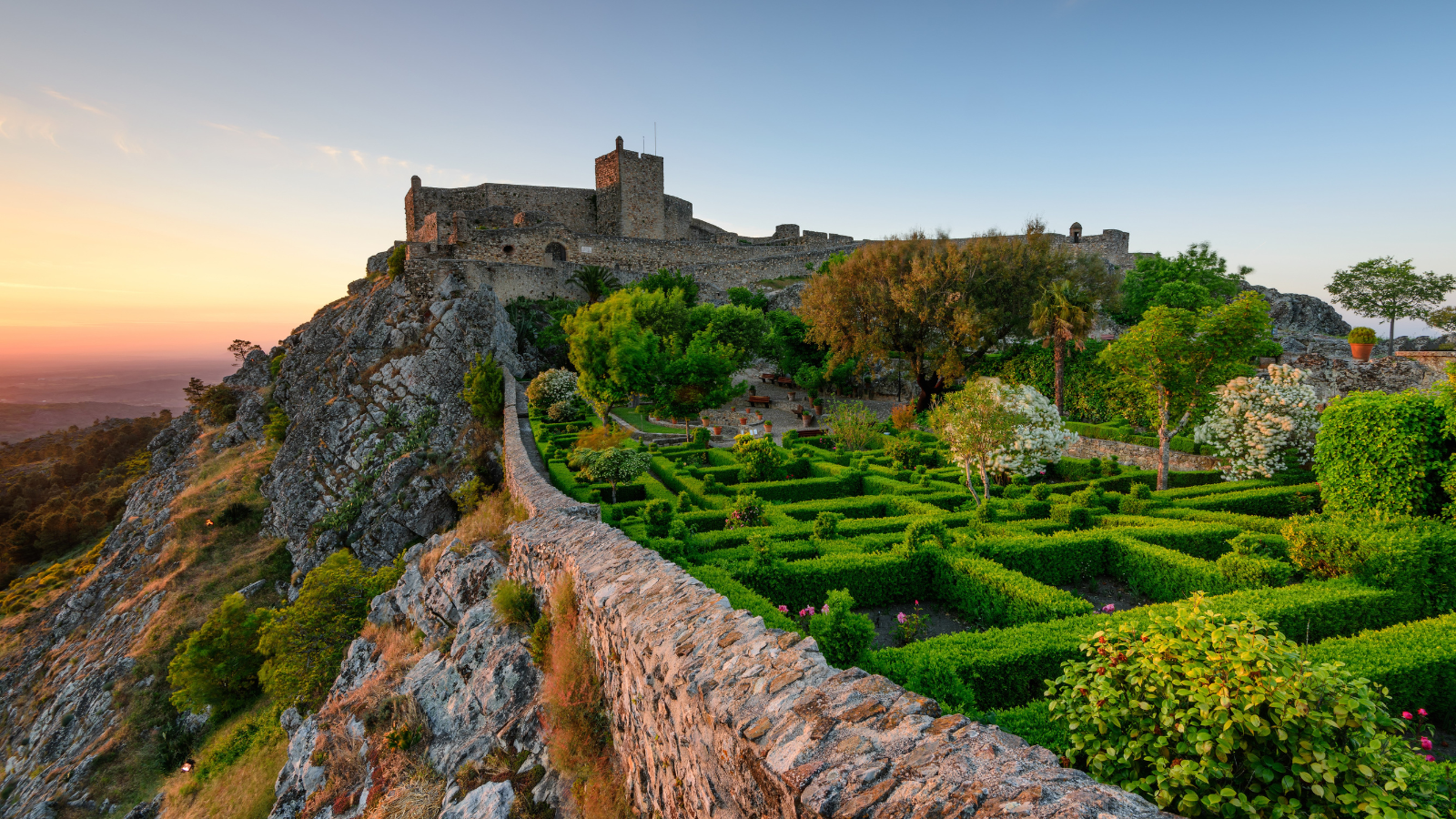
By the time you arrive at the walls of Marvão, the most beautiful 13th-century village in the Alentejo, you will probably have fallen for its charm. The village is situated at an altitude of 862 metres on a majestic escarpment facing Spain.
The castle’s walls and supports blend seamlessly with the mountain’s solid granite. These walls enclose the tiny whitewashed houses, cobbled streets and 15th century churches that make up so much of Marvão. Stay a few days in the charming little pousada on the main street and enjoy the view from the terrace.
7. Lindoso
Lindoso is located in the Peneda do Gerês National Park, one of Portugal’s greatest natural attractions, and is known for its collection of over 50 “espigueiros” (“little granaries”). They look like miniature tombs with crosses on the roof and are made of granite, stacked on pillars and slatted for ventilation. In this way, grain and maize are stored at the right humidity.
The village lies in the shadow of a medieval castle which, due to its location on the Spanish border, played an important role in the Portuguese Restoration Wars. Surrounded by wild, dramatic scenery and forest-covered peaks, the park is also home to wolves and golden eagles.
8. Carvalhal
This small village is set amidst pine forests, rice paddies and dunes near Comporta and has a beautiful white sand beach that provides the perfect backdrop for a sunset gallop. So hire a horse in nearby Cavalos na Areia and ride across the dunes to the turquoise waters.
Visit the Comporta Beach Club at Carvalhal Beach and enjoy eating delicious oysters while having your feet in the sand. After that, take a leisurely stroll back through the village, where you’ll see storks and houses built in the unique thatch and reed architectural style.
9. Talesnal
The nearly 27 slate villages that have miraculously survived in the centre of Portugal are spread throughout the country, with the most important cluster in the Lousã Mountains. The historically important villages are linked by footpaths and give an impression of the cuisine and crafts of the region.
Talesnal is considered one of the most beautiful examples, with the popular Ti Lena restaurant at its heart. Sample delicious regional dishes there, cooked using local chestnuts among other ingredients, or stop at one of the village shops for a talasnico, a pastry made from local honey, chestnuts and almonds.
10. Sortelha

Sortelha is perched on a granite rock and offers a breathtaking view of the countryside from the high keep of its castle. Just outside the castle entrance is a 16th century pillory with an armillary sphere on top. Bizarre-looking granite formations surround the village; one is called The Old Woman’s Head because of its resemblance. Another is called The Eternal Kiss.
The houses, surrounded by the city walls, have hardly changed since the Renaissance and offer a sense of time travel and a perfect platform for the annual medieval fair.


